
Seasonal relevance does not make a fashion post interesting by itself.
The moment, format, creator persona and product need to reinforce one another. Seasonal relevance creates the opening, but creative fit determines whether the post feels native enough to travel.
A Halloween post can still feel like an ordinary product placement with a costume attached. A stronger concept combines several signals the audience already recognizes: the moment, the format, the sound and the styling. The product then enters a story people have a reason to watch now.
Two Halloween posts from LookSky-managed virtual-influencer accounts show the difference. Both were timely. Both featured fashion. Neither was boosted. One generated 2.9 million views and measurable website traffic. The other generated 7,600 views.
The lesson is not that every brand should recreate the first post. It is that teams need a disciplined way to decide which seasonal trends fit the brand and move while the audience still cares.
Two Halloween posts, two different outcomes
LookSky compared two unboosted Halloween posts published through managed virtual-influencer accounts.
Trend, format and styling aligned
Seasonal and on-persona
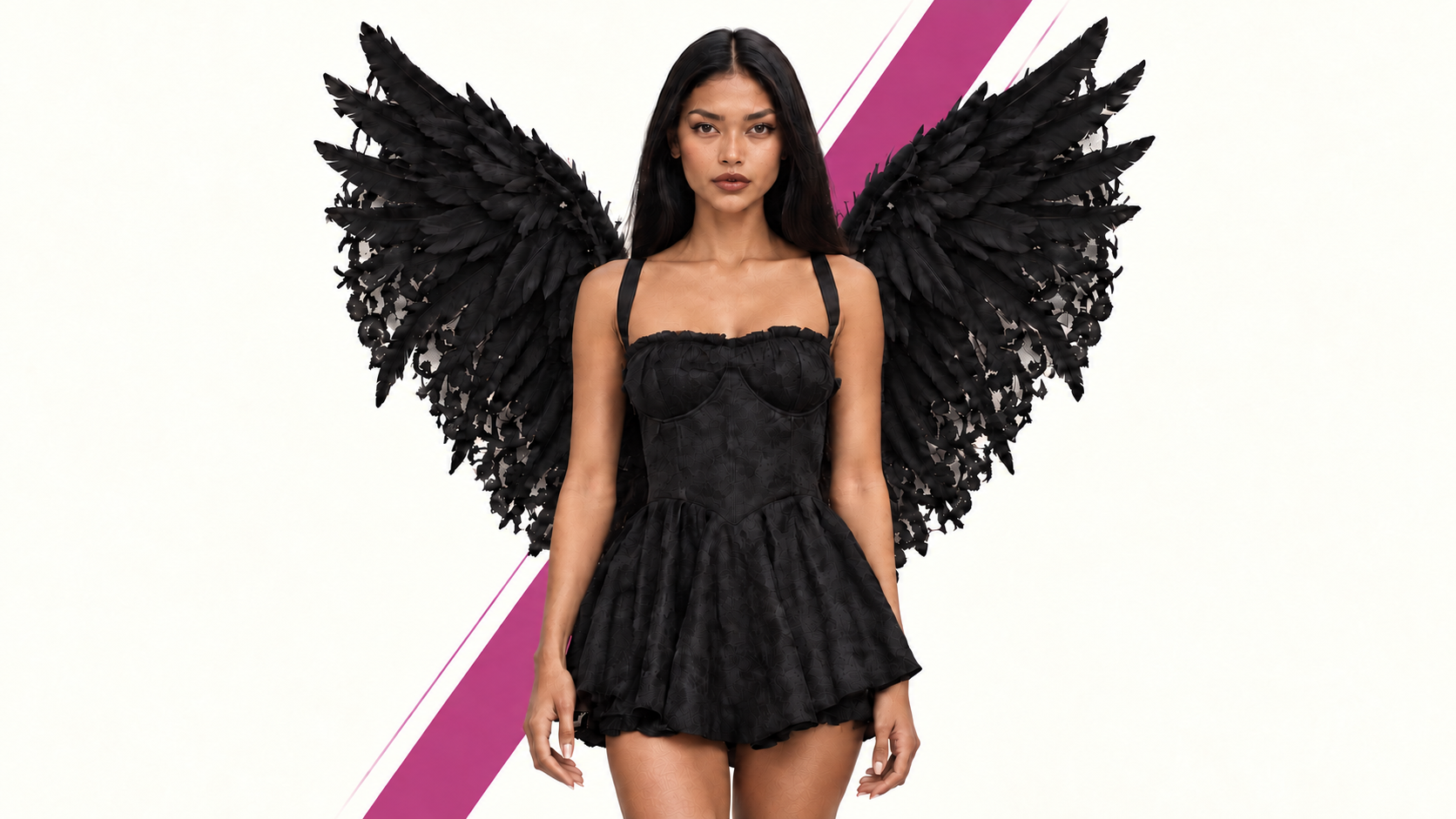
A familiar dance and music reference, a native short-form format and a black fashion look worked together without presenting the virtual influencer as Wednesday Addams.
The post drove thousands of UTM-tracked visits to the client's online store during the following month, showing that attention extended beyond the social platform to the website.
The second post used one of a client's dresses as a costume. LookSky selected the styling and outfit to fit the creator's persona rather than treating Halloween as permission to publish an arbitrary look.
The costume remained seasonal, product-led and consistent with the creator's visual identity.
The comparison does not isolate one causal variable. The posts used different concepts, sounds, formats and publishing conditions. It does show why “make a Halloween post” is not a useful creative brief. The seasonal label is only one part of the idea.
Why some seasonal content goes viral
The stronger post did more than acknowledge Halloween. It connected several signals the audience already understood: a timely cultural reference, familiar music and movement, a native social format and styling that belonged to the creator.
The costume post also had seasonal relevance and a real client product. But participation alone does not create momentum. The details have to reinforce one another.
A trend can be popular and still be wrong for the brand.
This is where judgment matters. A product may be visually suitable but forced into the format. A creator may be able to wear the look while still feeling disconnected from the story.
LookSky combines AI-supported monitoring with human creative judgment to find the smaller set of opportunities where the moment, product and creator can work together. The selection process is as important as the production itself.
Speed matters, but selectivity matters more
Trend cycles do not wait for a traditional campaign-production process. When LookSky's team identifies a suitable opportunity, it can adapt and produce a concept within minutes.
The speed comes from having the creator identity, brand boundaries and production system in place before the moment appears. The brand does not have to choose between moving quickly and staying recognizable.
That capability is difficult to reproduce with a loose collection of tools. Finding a trend is the easy part. The work lies in deciding whether it fits, adapting it without flattening the brand and producing it while the audience still cares.
Measure attention, action and business value separately
Views show whether the platform distributed the post and people began watching. They do not explain the entire customer journey. For a fuller framework, see How to measure influencer marketing for a fashion brand.
The Wednesday-inspired post produced both reach and trackable site activity. Together, these signals show that the concept moved people beyond the social platform and into the client's website.
The opportunity extends beyond Halloween
The takeaway is not to copy the Wednesday-inspired post. It is to build the ability to recognize and act on the right moment for the brand.
For another fashion label, that opportunity might appear as a holiday-party GRWM, gift-guide format, travel transition or New Year's styling story. Each requires a different creative decision. The common advantage is having a recognizable creator and an operating system ready when the moment arrives.
That turns seasonal content from a string of isolated campaigns into an ongoing source of product stories, audience learning and potential new-customer traffic.
Where LookSky fits
LookSky builds and manages virtual influencers for fashion brands. The team combines AI-supported trend monitoring with human creative judgment, then selects formats that fit the brand, product and creator persona.
Because the creator identity, content system and publishing process are already in place, the team can respond to a relevant moment without beginning a new creator search or campaign production cycle. The objective is not to use every trend. It is to recognize the few that give the brand a credible reason to participate.
Move with the moment.
LookSky builds the identity, content strategy and managed production system behind an always-on virtual influencer.
Book a LookSky demoFrequently asked questions
How should fashion brands use seasonal social media trends?
Participate when the seasonal moment, native format, creator persona and product reinforce one another. Seasonal relevance alone is not a creative strategy.
How can fashion brands respond quickly to seasonal trends?
The foundational work happens when a brand signs on with LookSky. The team establishes the creator, products, brand boundaries and approval process, then shares weekly and monthly content strategies for review. When a viral moment fits the brand and creator, LookSky can add it and produce a timely response within minutes.
Can a seasonal virtual-influencer post feature a real product?
Yes. The strongest integration gives the product a natural role in the transformation, costume, occasion or styling story while remaining native to the creator's world.
Company-reported results reflect the periods and attribution settings shown in LookSky and client dashboards. They are not independently audited benchmarks or guarantees of future performance.
Published October 6, 2026. Creator results are company-reported and do not guarantee future performance.