
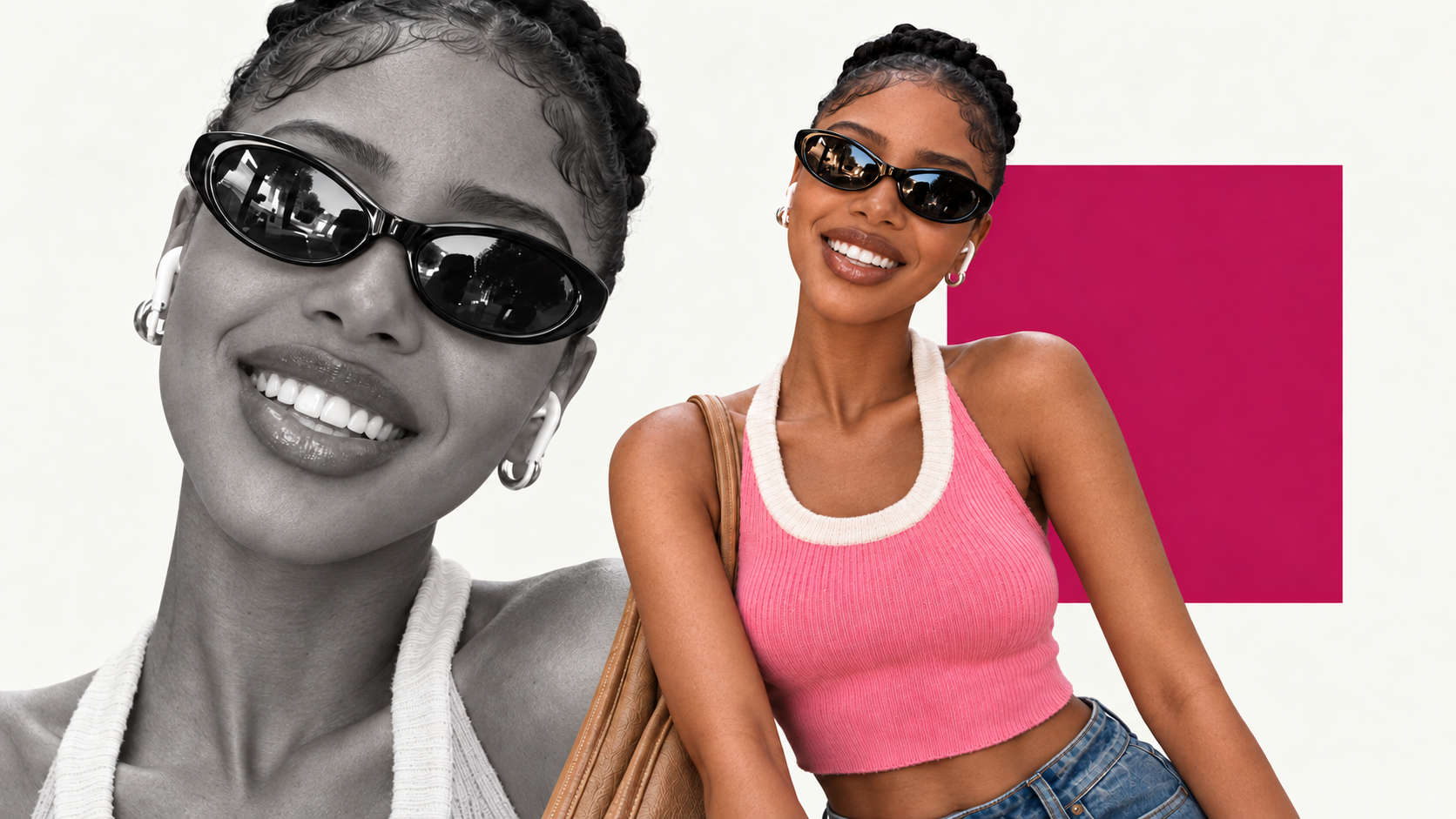
A virtual influencer gives a fashion brand something different from a sponsored post or an AI-generated image: a recurring creator identity the brand can own and operate over time.
A brand does not need one simply because it wants more content. It needs one when a recognizable creator can perform a continuing marketing job.
To build a persistent, brand-owned source of social content that can publish around the brand's calendar, develop recurring stories, test ideas organically and give proven creative more distribution.
Eight jobs a virtual influencer can perform
Build an owned creator identity
Develop the same persona, accounts and approved content across products and seasons instead of rebuilding the relationship for every campaign.
Publish on the brand's calendar
Support launches, restocks and seasonal moments without restarting creator sourcing, shipping and negotiation each time.
Create a recurring series
Give weekly edits, GRWMs, styling comparisons or product stories a recognizable host and format.
Develop a missing perspective
Build content around a customer, aesthetic, occasion or category that the primary brand feed does not express consistently.
Test ideas organically
Compare hooks, settings, styling directions and video formats through repeated publishing before increasing distribution.
Boost proven posts
Use organic views, watch time, saves, shares and traffic to identify eligible creative worth testing with paid media.
Connect creator and brand
Use selected collaboration, partnership or paid formats when a post matters to both audiences and the platform permits it.
Support human partnerships
Maintain the product story before, between and after human creators bring lived experience and community access.
The premise changes the content
Three virtual influencers can wear fashion while performing very different editorial jobs. The account needs more than a face. It needs a recognizable reason to return.
Company-reported results from September 2 through October 1, 2026. Valentina's native post analytics were captured separately from the account dashboard. Results are not independently audited benchmarks or guarantees.
Valentina: a timely fashion concept
The Wednesday-inspired Halloween post moved beyond Valentina's usual GRWM structure while keeping fashion at the center.
Test organically before increasing distribution
A virtual influencer account gives the brand a place to test product stories, hooks, settings, styling formats and video pacing. Views alone should not decide what worked. Watch time, saves, shares, comments, profile activity and website sessions reveal different kinds of interest.
Publish first. Identify evidence of demand. Then decide whether the post has earned additional distribution.
Meta allows advertisers to use eligible existing Reels and partner content in ads, subject to permissions, eligibility and current platform rules. (Meta Reels advertising guidance)
Lila's breakout suggests that its opening, movement, location, dress or music deserves investigation. Valentina's shares and saves show that her Halloween concept did more than earn passive exposure. Neither guarantees efficient advertising. Each gives the team a concept to repeat, vary or test.
Lila: fashion inside a travel story
The setting gives the video a lifestyle narrative while the dress remains part of what the audience came to watch.
Connect the creator and brand accounts selectively
A dedicated account gives the virtual influencer room to develop an identity. Selected posts can still connect with the primary brand account through eligible collaboration, partnership or paid formats.
If every post appears on both accounts, the feeds may become repetitive. Collaboration works best when the content matters to both audiences and supports a specific launch. Required advertising and relationship disclosures must remain clear. (Instagram branded-content guidance; FTC endorsement guidance)
Nia: model-off-duty city energy
The city-walk lip-sync carries Nia's model-off-duty positioning through a native social format.
When a virtual influencer is the wrong tool
Use a human creator or customer when the work depends on:
- genuine fit, comfort or product-performance experience;
- a personal recommendation or testimonial;
- access to an established community;
- attendance at a real event;
- cultural authority grounded in a person's participation.
A virtual influencer also makes little sense when the brand only wants a few isolated images. In that case, a production tool or campaign shoot may be more appropriate than building a recurring identity. A virtual character should not claim an experience it cannot have. (FTC guidance on AI avatars and testimonials)
Choose the job before the face
- What useful content does the brand struggle to publish consistently?
- Does that content need a recognizable host?
- Would ownership improve how the brand can publish or amplify it?
- Can the idea support a recurring series?
- What result would tell the team to repeat, change or stop?
Choose one primary use case. A new virtual influencer should not be expected to introduce every product, reach every customer and prove immediate sales at once. For a fuller performance framework, see How to measure influencer marketing for a fashion brand.
Where LookSky fits
LookSky builds and manages virtual influencers for fashion brands. The brand defines the products, priorities and guardrails. LookSky develops the persona and editorial direction, produces the content, manages the dedicated accounts and uses performance signals to guide the next cycle.
The objective is not to add another fictional face to the feed. It is to give the brand a creator identity with a clear job and an operating system behind it.
Give the creator a clear job.
LookSky develops the persona, runs the content system and manages ongoing publishing around your brand.
Book a LookSky demoFrequently asked questions
Why would a brand use a virtual influencer?
To build a creator identity it owns, publish around its calendar, create recurring series, test content organically, amplify promising posts and maintain continuity around human partnerships.
Is a virtual influencer just an AI model?
No. An AI-generated model may appear in one asset. A virtual influencer is a recurring persona with a consistent identity, content strategy, publishing presence and ongoing role.
Can a brand boost a virtual influencer's post?
Potentially. The method depends on the platform, permissions, eligibility and advertising setup. Strong organic performance can identify ideas worth testing, but it does not guarantee paid performance.
Does a virtual influencer replace human influencers?
No. Human creators remain important when the work depends on personal experience, an established audience or community trust.
Can a virtual influencer review a product?
It should not claim real experience with fit, comfort, fabric feel or product performance. It can present approved information and clearly fictional editorial scenarios.
Sources checked October 1, 2026. Platform features and advertising workflows may change. Creator results are company-reported and do not guarantee future performance.