
The clothes still matter, but movement, suspense, humor, aspiration, surprise or story earns the attention first.
That distinction matters because social platforms do not distribute a fashion post simply because the product is attractive. The post competes with every other piece of entertainment in the feed.
LookSky is seeing two entertainment-led formats show promise across its virtual-influencer portfolio. One is immediate visual spectacle, demonstrated by a Nia Dlamini post that reached 3.4 million views. The other is microdrama, an emerging format that produced 34,100 and 62,400 views in two early Vera Vale stories.
The results are different in scale, but they point to the same creative shift: fashion content becomes more watchable when something happens.
What does fashion as entertainment mean?
Fashion as entertainment combines fashion with an entertainment mechanism.
A conventional product post asks the viewer to care about the garment. Entertainment-led fashion content gives the viewer another reason to stay: a reveal, character, conflict, joke, transformation, performance or unanswered question.
The garment does not disappear. It becomes part of the experience.
| Product-first fashion content | Fashion as entertainment |
|---|---|
| Shows the look | Gives the look a role in a story |
| Explains the product | Creates curiosity before explanation |
| Assumes shopping interest | Earns attention from a broader audience |
| Ends when the product is shown | Can continue through characters and episodes |
| Measures whether people saw the item | Also measures whether people wanted to keep watching |
Fashion as entertainment is not a rejection of product content. It is a way to make product content more native to an entertainment-driven feed.
TikTok describes itself as a video-first entertainment platform and advises brands to create content that feels like content before it feels like an ad. Its fashion creative guidance specifically recommends storytelling, skits, unexpected product perspectives, transitions and before-and-after formats.
Fashion as entertainment is not new. The commitment is changing.
Fashion has always borrowed from entertainment. Brands have made short films, dressed performers, worked with musicians and supported cinema for decades. Chanel traces its relationship with film to Gabrielle Chanel's work in Hollywood in 1931. Gap has also built campaigns around music and dance throughout its history.
What is notable now is the move from a single campaign toward a sustained entertainment platform.
Gap x JYT
Gap calls its new platform “Fashiontainment.” Its first partnership under that platform is a multiyear collaboration with the emerging boy band JYT. The plan connects fashion with a co-produced docuseries, music, live performances, retail experiences and a collection designed with the group. This is Gap Inc.'s first deal under the new platform, not the fashion industry's first multiyear entertainment partnership.
Dior x A24
Dior’s collaboration with A24 approaches fashion as entertainment through film, theatre, artists and storytelling. Dior describes it as the start of a creative partnership.
The duration matters. Recurring characters, stories and cultural associations give audiences more opportunities to recognize a brand. That familiarity can build trust and a stronger sense of connection over time. The brand becomes part of an entertainment world people return to, rather than an interruption they encounter once.
These partnerships operate at a scale most brands cannot reproduce. LookSky makes the same strategic idea practical for social content. A brand can build a recognizable virtual creator, test performance-led and story-led formats, and develop the ideas audiences choose to watch. Consistency turns individual posts into an ongoing relationship between the creator, the brand and its audience.
Nia's 3.4-million-view post: fashion as performance
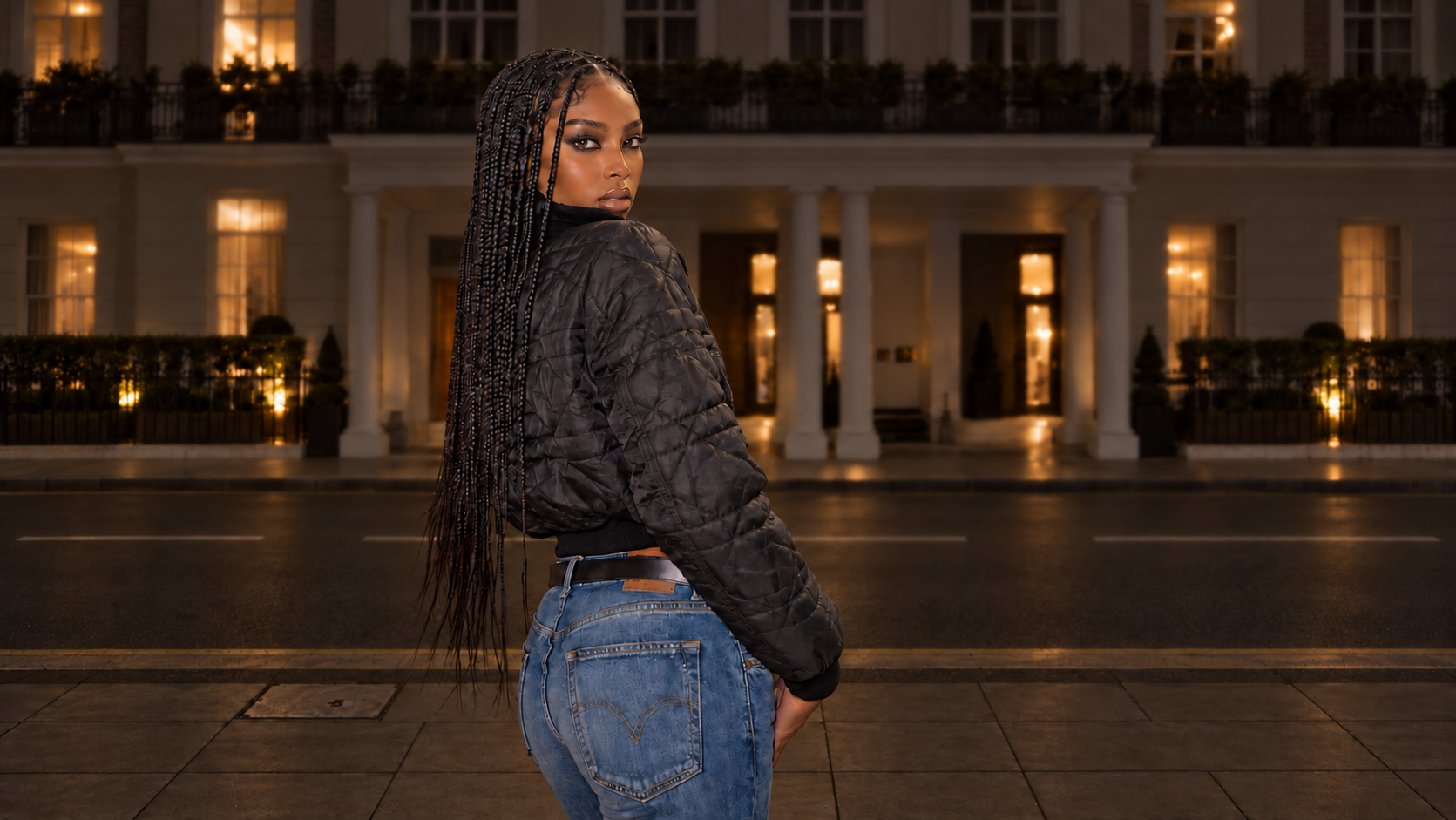
Nia's leading post did not rely on a detailed product explanation. It used attitude, movement, nightlife energy and a strong fashion reveal to make the look feel like a performance.
The Instagram post reported:
| Result | Nia's entertainment-led post |
|---|---|
| Views | 3.4M |
| Engagements | 490.6K |
| Likes | 448.2K |
| Paid boosting | None |
Nia’s 3.4-million-view post. A fashion reveal built around attitude, movement and nightlife energy.
From the post's September 30 publication date through October 14, Nia's connected accounts reported 5.1 million views, 685,400 engagements and 35,700 followers. Total followers increased 8% from the previous period.
On Instagram, Nia generated 3.7 million views and 506,628 engagements across seven posts, producing a 13.7% engagement rate. That is more than eight times Traackr's reported 1.65% average for organic U.S. fashion creator content. Her performance was not just large in reach. Viewers actively responded through likes, comments, shares and saves.
The 3.4-million-view post represented approximately two-thirds of the account's views and more than 70% of its engagements during that reporting window. The creative did not merely outperform Nia's other posts. It expanded the scale of the account's overall period.
The lesson is not that every fashion brand should reproduce the same video. The useful mechanism is broader: turn the outfit into a moment with enough energy, character and movement to hold attention on its own.
Vera's microdramas: fashion as story
Vera's early microdramas use a different entertainment mechanism. Instead of relying on a single visual performance, they introduce a situation the viewer wants resolved.
“Wrong delivery” generated 34,100 views on Instagram, while “Wrong room” reached 62,400 views as of October 15.
Together, the two stories produced:
| Result | Two Vera microdramas |
|---|---|
| Views | 96.5K |
| Engagements | 748 |
| Likes | 641 |
Views are current as of October 15, 2026. Engagement and like totals are from October 14, 2026.
Wrong delivery. A short narrative premise gives the audience a reason to stay for the reveal.
Wrong room. A second story tests whether Vera’s character can carry a repeatable format.
Vera is still an emerging account. From her first post on October 10 through the October 14 account snapshot, her connected accounts reported 55,600 views, 1,200 engagements and 147 followers. Her follower count increased 635% from the previous period, from a small base. By October 15, “Wrong room” alone had reached 62,400 views, showing how quickly the account's performance was still developing.
These early results do not put Vera's microdramas in the same performance tier as Nia's breakout post. They do strengthen the evidence that viewers will enter a fashion creator's world through a narrative premise.
Microdramas are also becoming a larger entertainment behavior. The Associated Press reported that global microdrama revenue is expected to reach $14 billion by the end of 2026, citing Omdia. The format's defining features are relevant to social fashion content: vertical framing, immediate conflict, short episodes and a reason to watch the next installment.
Spectacle and story solve different creative problems
Nia's performance-led post creates an immediate emotional reaction. Vera's microdramas create curiosity and continuity.
Both formats can support fashion, but they do different jobs.
| Entertainment format | Audience reason to watch | Fashion's role |
|---|---|---|
| Performance | Energy, attitude, movement, transformation | The look creates the visual payoff |
| Microdrama | Conflict, suspense, humor, resolution | Clothing establishes character and advances the scene |
| Cultural moment | Recognition and participation | Styling connects the brand to the moment |
| Recurring series | Familiarity and anticipation | The creator develops a recognizable fashion world |
A brand does not need to choose one format forever. A defined creator can move between them while keeping the identity recognizable.
Why small and medium-sized fashion brands struggle to make entertainment consistently
Small and medium-sized fashion brands understand that social content needs a hook. The harder problem is producing enough distinct ideas without adding a large creative team or losing brand control.
Entertainment adds more variables than a product post:
- character and persona;
- setting and visual world;
- pacing and opening frame;
- movement, dialogue or conflict;
- product accuracy;
- platform-native editing;
- continuity across multiple posts.
One successful video does not create a repeatable system by itself. The brand still needs to understand which part of the concept earned attention and how to develop the next idea without publishing a weaker imitation.
This is where a managed virtual influencer becomes useful. LookSky gives smaller fashion teams a consistent creator identity while changing the story, setting, styling and entertainment format around it.
The product still needs a clear role
Fashion as entertainment fails when the entertainment and product have nothing to do with one another.
A random joke may earn views while teaching the audience nothing about the creator or brand. A dramatic story may overwhelm the garment. A trend may be popular but wrong for the persona.
The product does not need to appear as a hard sell. It does need a reason to be there.
In performance-led content, the look can create the transformation or attitude. In a microdrama, clothing can establish status, occasion, character or contrast. In a recurring series, the creator's styling becomes part of the visual language viewers recognize.
LookSky selects entertainment formats that fit the creator, product and brand rather than adding a garment to an unrelated viral idea.
What should brands measure?
Entertainment-led fashion content should be evaluated as both content and fashion marketing.
| Question | Useful signals |
|---|---|
| Did people choose to watch? | Views, reach, watch time, completion and replays |
| Did the idea create a response? | Likes, comments, shares and saves |
| Did the audience enter the creator's world? | Profile visits, follows and recognition in comments |
| Did fashion remain part of the response? | Product questions, styling comments, link requests and saves |
| Is the format worth developing? | Performance across the next episode or creative variation |
One high-view post is a signal, not the entire strategy. The next creative decision should test whether the entertainment mechanism can travel into another look, story or episode.
That learning loop is more valuable than treating each post as an isolated campaign.
Where LookSky fits
LookSky builds and manages virtual influencers for fashion brands. The service combines creator identity, fashion content strategy, AI-supported production, human creative judgment, publishing and performance learning.
That operating model gives brands room to create content beyond the conventional product post. A virtual influencer can perform, transform, enter a cultural moment or carry a serialized microdrama while remaining recognizable from one post to the next.
The objective is not entertainment for its own sake. It is fashion content people choose to watch, remember and return to.
Frequently asked questions
What does Gap mean by “Fashiontainment”?
Gap uses “Fashiontainment” as the name of its platform connecting fashion with original content, music, live experiences and cultural partnerships. More broadly, fashion as entertainment uses performance, transformation, humor, suspense, character or story to give people a reason to watch before asking them to shop.
Why does fashion as entertainment work on social media?
Fashion posts compete with entertainment across the feed. A strong hook, character or story can earn attention from people who were not already looking for the product. That broader attention can introduce the creator and brand to new audiences.
What is a fashion microdrama?
A fashion microdrama is a short, usually vertical story in which fashion helps establish the character, conflict, setting or payoff. Several related episodes can build an ongoing creator world.
Can virtual influencers create entertainment-led fashion content?
Yes. A virtual influencer gives a brand a consistent character it can develop across performances, transformations, cultural moments and serialized stories. LookSky manages the identity and production system so each format remains connected to the brand.
Should every fashion post be entertainment-led?
No. Brands still need product education, campaign imagery and direct-response content. Entertainment-led content adds an attention-building layer to the mix and can reveal which creator stories deserve further development or amplification.
Make something worth watching.
LookSky creates and manages virtual influencers that give fashion brands a consistent identity for performance, storytelling and ongoing audience development.
Book a LookSky demo