
Fashion brands do not always have weeks to produce content for a new collection.
Sometimes, the marketing team has only a few days to organize a photoshoot. Sometimes, the physical products are not ready. The launch calendar keeps moving, but the brand still needs content that can introduce the collection and generate interest.
AI can help close that gap. It can also easily produce slop.
The difference comes down to the quality of the production references, the human team reviewing the output, and who manages the process.
The launch date does not wait for the photoshoot
In a recent conversation, an established fashion brand described a recurring production problem.
The team sometimes had only a few days to organize a photoshoot for its website. In other cases, the physical product was not available in time for a traditional shoot.
Compress casting, styling, location, production and approvals into a few days.
Wait for samples while the launch calendar keeps moving.
Introduce a collection without enough creative material to build interest.
Fill the calendar with content that does not tell the story of the new collection.
The same delay affects influencer marketing. Human influencers need physical products before they can style, photograph and post them. The brand must manufacture the garments, receive the inventory, distribute samples, coordinate the creators and wait for the finished content.
By then, the collection may be close to launching.
AI influencers can start building interest earlier
A brand does not need to wait until physical products are available to begin introducing a new collection.
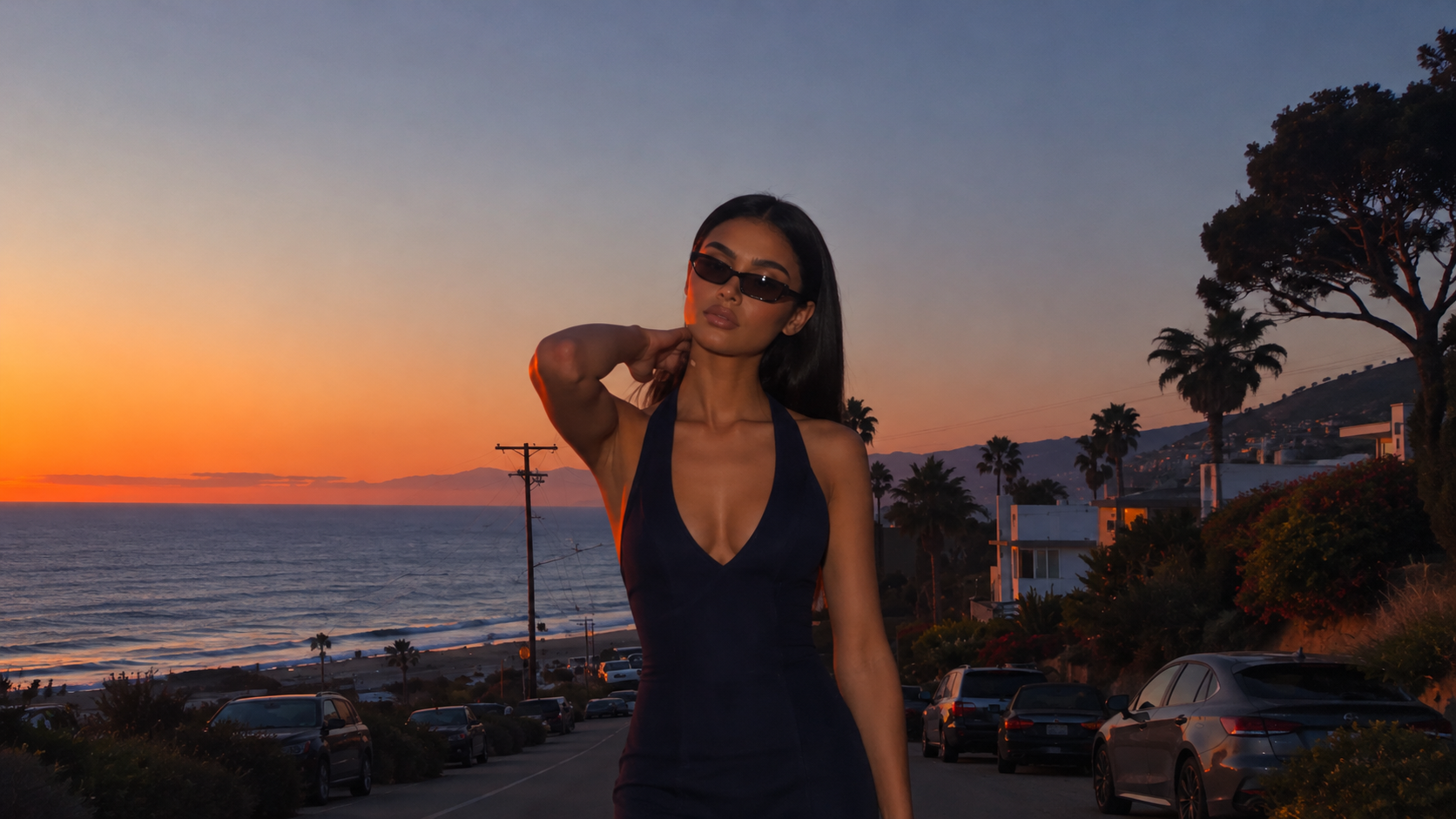
LookSky’s AI influencers can tease an upcoming launch from their own dedicated social accounts. This gives the brand another channel for building awareness without changing the content strategy or visual identity of its primary social accounts.
The timing is particularly useful when the brand has approved production images but does not yet have physical products to distribute to human influencers. LookSky can begin producing pre-launch content while manufacturing and distribution are still underway.
The content might begin with a mood or lifestyle teaser, move into a partial product reveal, and continue through the collection announcement, launch day and follow-up posts featuring individual products.
The brand can decide whether to reuse the content on its primary social accounts, website or paid channels. It does not have to. The dedicated AI influencer account can generate interest independently.
AI and human influencers can play different roles
AI influencers do not need to replace a brand’s existing influencer program.
| AI influencers | Introduce the creative world, build early awareness and begin publishing before physical products are available. |
|---|---|
| Human influencers | Bring established audience trust, personal styling and their experience with the physical product after samples arrive. |
| Primary brand accounts | Publish the assets that best fit the company’s established voice, visual identity and campaign calendar. |
This gives the brand an additional content and distribution channel without disrupting what already works.
Producing AI content can easily produce slop
Generating an image is not the same as producing usable fashion content.
A polished image can still show a garment the brand never designed.
These mistakes matter because the product is not a background detail. The garment is the subject.
That is AI slop. Speed only helps when the finished content accurately represents the collection.
Accurate content starts with accurate references
LookSky can work from several types of production references:
Clear product views that document silhouette, construction and surface details.
References that show shape, drape and how the garment sits in three dimensions.
References that show proportions, placement and the relationship between garment and body.
These references give our production team a source of truth. They document the garment’s actual color, silhouette, fabric, construction and defining design details.
A prompt cannot replace this product information.
A human team must check the work
LookSky’s human team compares the AI-generated content with the original production images.
The team checks color, silhouette, fabric appearance, necklines, hemlines, seams, construction, closures, prints, embellishments, accessories and styling.
The review extends beyond the garment. Our human team also checks the AI model’s face, body, hair, movement and overall appearance across scenes. We review whether the setting, styling, music, caption and creative direction fit the brand and intended audience.
When something is wrong, we revise it.
Content goes through multiple rounds of internal review before it is delivered or published. The objective is not simply to generate an image. It is to create content the brand can use with confidence.
LookSky manages the entire process
LookSky is not a self-service image generator. We do not give the brand a prompt box and ask its marketing team to manage the rest.
The brand receives a managed creative and social media program, not another tool for its internal team to operate.
The brand owns its AI model
A dedicated AI model can become a recurring character for the brand rather than a disposable face used in one campaign.
The brand owns the AI model and can use the character across social media, its website, paid advertising and other brand-owned channels.
The same recognizable person can introduce new collections, appear in different locations and support multiple product categories over time. The AI influencer becomes part of the brand’s long-term creative system.
AI should expand production without removing accountability
AI gives fashion brands another way to produce content when traditional production cannot meet the launch schedule.
It does not remove the need for creative direction, product knowledge, styling, quality control or approval. Those responsibilities become more important when AI is involved.
The question is not whether an AI tool can generate a fashion image. The question is whether the finished content accurately represents the product, fits the brand, reaches the intended audience and gives people a reason to care about the launch.
That requires more than content generation. It requires a human team managing the entire process.
Build interest in the collection earlier.
LookSky manages the process from product references and creative strategy through generation, human review, approvals and publishing.
Book a LookSky demoFrequently asked questions
Can LookSky create content before physical samples arrive?
Yes. LookSky can work from approved production references, including flat production images, photographs of the garment on a form, or images of the garment on a fit model.
How does LookSky prevent AI-generated garment errors?
LookSky’s human team compares the generated content with the original production images. The team reviews color, silhouette, fabric, construction, embellishments and other defining details, then revises anything that is incorrect.
Does the content have to appear on the brand’s primary account?
No. A dedicated AI influencer can publish through her own social accounts. The brand can decide whether selected content should also appear on its primary social channels, website or paid media.
Does an AI influencer replace human influencers?
No. AI influencers can begin building awareness before products are available for distribution. Human influencers can contribute established audience trust, personal styling and experience with the physical garment after samples arrive.
Who owns the AI model?
The brand owns its dedicated AI model and can use the character across social media, its website, paid advertising and other agreed brand channels.
Is LookSky a self-service AI generator?
No. LookSky manages audience strategy, model development, creative direction, content generation, human quality control, approvals and publishing.