
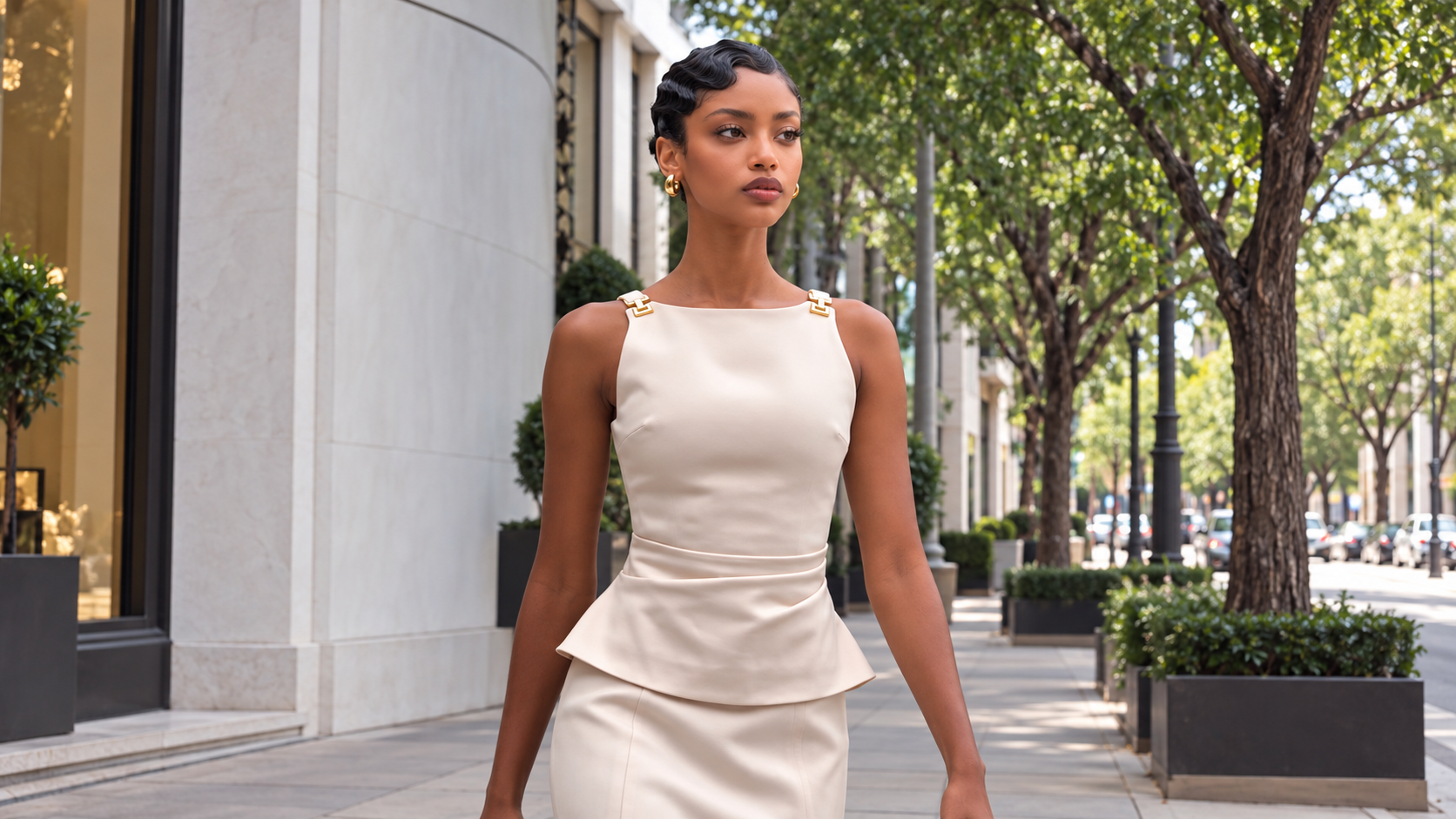
A fashion brand does not need to dismantle a mature social strategy to make room for an AI influencer.
One established occasionwear brand working with LookSky already had a mature brand account, a consistent publishing strategy, human-influencer relationships and performance advertising. The company was not looking for a replacement for those programs. It wanted creative variety and a way to reach new customer segments its existing content might not be reaching.
LookSky added a dedicated virtual-influencer channel to the system the brand had already built.
That is the most useful role for an AI influencer. It gives the brand another creative and audience-building layer while human creators, the primary brand account and paid media continue doing their own jobs.
Supplementing a strategy is different from replacing it
Human influencers bring something a newly created virtual influencer cannot: an established audience that already knows the creator and may trust her opinions.
That trust can be especially valuable when a customer is considering a purchase. A human creator can speak from personal experience, show how she wears the product and answer questions about how it feels. An AI influencer cannot provide truthful firsthand testimony about wearing a garment.
A dedicated virtual influencer creates a different kind of value. The brand can develop one recognizable identity over time, choose the products and stories that fit her world, and build a publishing plan that does not end after one sponsored post.
| Primary brand account | Official brand identity, campaigns, launches and customer communication |
|---|---|
| Human influencers | Established audiences, personal credibility and lived product experience |
| UGC and customer content | Social proof and real customer perspective |
| Paid advertising | Targeted distribution, conversion and controlled media investment |
| Dedicated virtual influencer | Ongoing character, creative experimentation, organic audience building and additional product stories |
The strongest social strategy can use several of these channels at once.
A mature brand may need creative freedom, not more of the same
A brand’s primary account has responsibilities. It needs to maintain a recognizable visual identity, support the commercial calendar and communicate clearly with customers.
Those responsibilities can make the account less flexible. Not every music trend, story format or experimental concept belongs on the main feed.
A dedicated virtual-influencer account gives the brand more room to test:
- Emerging music and social formats
- Cinematic fashion stories
- Different locations and cultural settings
- New styling interpretations
- Products that need more visibility
- New colorways or product concepts before manufacturing
- Content designed for a customer segment the primary account does not reach consistently
Experimentation still needs direction. A second account that repeats the same products, visuals and messages for the same audience adds activity without creating much new value.
The virtual influencer needs a clear point of view, target audience and role in the wider marketing system.
Additional distribution is measurable. New customers require more proof.
LookSky reviewed 90 days of company-reported performance ending October 7, 2026. Four managed virtual-influencer identities produced approximately:
The portfolio included three LookSky-owned influencers and one influencer developed for a brand client.
The occasionwear brand’s dedicated virtual influencer published 140 posts during the period and generated approximately 1 million views, 57,900 engagements and a 5.5% Instagram engagement rate. Her two leading posts produced approximately 321,100 and 279,700 views.
These results show that a dedicated virtual-influencer account can create meaningful additional distribution and audience response.
They do not prove that every viewer was a new customer or that the account reached an entirely incremental audience. Proving that claim requires demographic comparisons, new-visitor data and customer-level measurement that separate existing customers from new ones.
LookSky uses location, styling, product selection, music and story format to create for the audience a client wants to reach. After publishing, the team reviews the available audience and performance data to determine whether the content is moving in that direction.
The objective is not to declare a new audience before the data supports it. The objective is to build a distinct channel, test it and learn who responds.
A virtual influencer can give one product several creative lives
A brand does not need to reserve separate products for human and virtual influencers. In many cases, both can feature the same garment and place it in different contexts.
That was not the sequence in LookSky’s example with the occasionwear client. No human creator featured the product.
The white lace dress was a new item from a summer collection. A dedicated virtual influencer introduced it through her account before it had become a bestseller.
Revenue increased approximately 221%.
The comparison uses two equal 52-day periods. The dress became the brand’s second-highest-selling product.
LookSky confirmed that inventory could support more attention, then created four additional virtual-influencer concepts featuring the same dress. Two of the follow-up concepts became the creator account’s top-performing posts during the measured period. Together, they generated approximately 221,700 views and 9,846 engagements.
The brand later used the same white lace dress in paid advertising featuring three AI influencers: Nia, Claire and Ava. In the brand’s year-to-date ad review, all three creatives featuring the dress delivered more than 3x ROAS. The dress moved from an organic virtual-influencer post into additional organic concepts and paid creative, while the brand’s primary social, merchandising and advertising programs continued operating alongside it.
The timing does not prove that the virtual-influencer content caused every sale. Customers may have discovered the product through the brand account, advertising, search or other channels.
This is one way a virtual influencer can supplement a mature social program. The dedicated account gives the brand another place to introduce a new product, respond to early demand and develop multiple creative interpretations without requiring every experiment to appear on the primary brand feed.
Cinematic content can explore territory outside the primary feed
Virtual influencers also give fashion brands a way to test more narrative content.
LookSky tested this approach through Vera, one of its own virtual influencers. The team created a micro-drama centered on a father and daughter, with fashion playing a role in the story rather than appearing as a standard product presentation.
Vera’s micro-drama reached 1.1 million views.
The latest analytics capture reported 33,800 engagements and 30,400 likes on Instagram. An earlier capture reported 5,100 new followers.
The post did not feature a client product, and LookSky did not use paid promotion to produce the reported result.
It was a dogfooding experiment designed to test whether the team could take a cinematic fashion concept from script to published content and earn a response from a real audience.
The result does not mean every micro-drama will go viral. It shows why a dedicated virtual-influencer account can be useful: the team can explore a format that may feel too experimental for a brand’s primary feed, then use the audience response to decide what to develop next.
A virtual influencer can test products that do not exist yet
Fashion brands make product decisions before they know how customers will respond.
A virtual influencer can help the brand visualize an unmanufactured colorway, silhouette or styling direction before committing to a larger production decision. The brand can place the concept inside a coherent piece of content rather than showing an isolated rendering.
This does not replace formal demand forecasting, customer research or merchandising judgment. Social response can be distorted by the concept, model, setting, music or distribution. A highly viewed post does not prove that customers will purchase the product at the intended price.
It can still provide an early signal. Comments, saves, shares, profile activity and customer questions can help the brand decide whether a concept deserves more research.
LookSky treats this as a capability, not a completed client case study. Any public test should also disclose the synthetic nature of the content and avoid implying that an unavailable product can already be purchased.
The account gives the brand something it can keep developing
Most human-influencer campaigns provide temporary access to an independent creator’s audience. That access can be extremely valuable, but the creator retains her own identity, audience and editorial decisions.
A dedicated virtual influencer gives the brand a persistent character and publishing system it can continue developing.
Carry a recognizable identity across multiple collections.
Return to an item after a restock or campaign change.
Create recurring stories and editorial concepts.
Track which locations, styles and products suit the audience.
The audience does not become a guaranteed brand asset simply because the character is virtual. Platform distribution can change, followers can disengage and account ownership must be defined in the commercial agreement.
The practical advantage is continuity. The brand does not need to start with a new face, voice and account history every time it needs another post.
More control still requires human judgment
Virtual-influencer content gives the brand more control over the caption, styling, setting, publishing schedule and long-term character direction.
That control does not come from pressing a button.
At LookSky, a person develops each piece of content. The work then moves through multiple rounds of internal review, revision and approval. The team checks the character, garment, styling, story, platform fit and connection to the brand.
Clients can also review posts before publication. That step gives the brand an opportunity to decide whether the content feels connected to its identity and current priorities.
The virtual influencer publishes through her dedicated account. The brand can then decide whether to use selected content on its primary channels or in paid advertising, subject to the agreed usage rights and platform requirements.
This structure preserves room for experimentation without removing brand oversight.
When a human influencer remains the better choice
LookSky should not decide that every product or campaign belongs with a virtual influencer. The brand needs to make that decision based on the objective.
Personal testimony, truthful product reviews, firsthand fit or comfort experience, community trust, public identity, events and interviews.
A recurring identity, creative variety, experimental formats, cinematic settings, ongoing content, organic tests and additional product interpretations.
The answer can be both.
Start with one job for the virtual influencer
A new virtual influencer should not be expected to reach every customer, promote every product and prove immediate sales at once.
Start by defining one primary job:
- Reach a customer segment the brand wants to understand
- Add cinematic content to the publishing mix
- Create more interpretations of proven products
- Support monthly collection drops
- Test a new editorial territory
- Build an organic account whose strongest concepts can inform paid creative
Then define the audience, character, product role, publishing cadence, approval process and measurement plan around that job.
The goal is not to add AI content because it is new. It is to add a channel that performs a useful role within the system the brand already has.
Build an AI influencer around the strategy you already have.
LookSky builds and manages dedicated virtual influencers for fashion brands, from audience strategy and styling through production, publishing and performance review.
Book a LookSky demoFrequently asked questions
Do AI influencers replace human influencers?
No. Human influencers bring established audiences, personal credibility and lived product experience. A dedicated virtual influencer can add ongoing content, creative experimentation and a persistent character the brand can develop over time.
Can human and AI influencers feature the same product?
Yes. Different creators can style and contextualize the same product in different ways. This can give customers more ideas and help the brand learn which settings, stories and occasions generate a response.
Where should a virtual influencer publish?
LookSky’s virtual influencers publish through their dedicated accounts. The brand can decide whether selected content should also appear on its primary channels or in paid advertising, subject to the agreed rights and platform requirements.
Can an AI influencer help a brand reach new customers?
A virtual influencer can be designed around an audience or content territory the brand wants to explore. Reaching genuinely incremental customers must still be verified through audience, traffic and customer data rather than assumed from views alone.
Can virtual influencers test products before manufacturing?
They can visualize and introduce potential products or colorways before manufacturing. Audience response can provide an early signal, but it does not replace merchandising analysis, demand forecasting or direct customer research.
How does LookSky keep virtual-influencer content connected to the brand?
LookSky uses human creative direction, internal reviews, revisions and approvals. Clients can also review posts before publication to confirm that the content fits the brand.