
In this guide
AI can produce a fashion image in seconds. Producing an image that looks like your brand is a different job.
The difference is usually found in details that are easy to miss at first glance: skin that looks overly smooth, hair that changes between posts, a pose that feels stiff, a neckline that has moved, an embellished panel that has disappeared, or fabric that no longer hangs as it does on the real garment.
One imperfect image may seem minor. Repeated across a social feed, those inconsistencies can make a brand look generic. Worse, they can give customers an inaccurate impression of the product.
For a small or midsize fashion brand with a lean team, the question is not simply whether AI can create more content. It is whether the brand has the time and fashion judgment to direct, check and improve that content consistently.
The short answer
Yes, a small fashion brand can use AI content without looking cheap or generic—but only when AI is treated as part of a managed creative process, not as a one-click replacement for creative direction.
Good AI fashion content requires three forms of consistency:
- Character consistency: the AI persona’s face, skin, hair, body, movement and personality should remain recognizable.
- Product consistency: the garment’s silhouette, fabric, color, construction and embellishments should stay faithful to the reference material.
- Brand consistency: the styling, settings, tone and story should feel as though they came from the same fashion brand over time.
The tool generates an output. People still have to decide whether that output is right.
More content does not remove the need for judgment
The pressure to create is real. In a 2025 study of more than 1,600 marketers, Adobe reported that 96% had seen content demand at least double during the previous two years. Sixty-two percent said it had increased fivefold or more. Social content was the fastest-growing area of demand for 66% of respondents, while 36% said finding time for content creation and ideation was a challenge. Source: Adobe
Generative AI can help a brand respond to that pressure. It can expand a concept into more scenes, formats and variations without arranging a new shoot for every post.
But faster generation also creates more material to assess. Someone still needs to choose the references, guide the visual direction, reject weak outputs, request corrections and decide what is good enough to represent the brand.
That is where self-service often becomes another job for a lean fashion team.
You do not need “prompt engineer” on your business card to use an AI platform. But a self-managed workflow does require someone to translate fashion decisions into instructions, test variations and diagnose why an output is wrong. If the character’s identity drifts or a garment loses an important detail, the team has to work out whether to change the prompt, the references, the generation method, the edit or the entire concept.
That person also has to wear several creative hats at once. They become the casting director who selects the right face, the fashion stylist who considers how the product should be worn, the designer who evaluates visual details, and the creative director who decides whether the finished work belongs in the brand’s world. A capable marketing team member may understand the brand extremely well and still not have the specialist experience—or the time—to perform all of those roles for an ongoing content operation.
AI can generate the image. It cannot decide whether the face, the garment and the idea belong to your brand.
Brands already have product launches, e-commerce imagery, organic social, paid media and human-influencer relationships to manage on their primary accounts. Adding another tool does not remove work unless a team also takes responsibility for operating it.
A believable AI persona depends on small details
A dedicated AI persona should become more recognizable with time. The audience should not have to wonder whether every post features a different person.
That means reviewing more than the face.
Skin: Texture should feel appropriate to the lighting and shot. Excessive smoothing, inconsistent freckles or beauty marks, and changing skin tone can make a character feel synthetic or unstable.
Hair: Length, parting, color, density and texture should remain coherent. Hair also needs to interact convincingly with shoulders, collars, earrings and motion.
Facial identity: Eye shape, jawline, nose, lips and facial proportions should hold across close-ups, profiles, expressions and different lighting conditions.
Hands and anatomy: Fingers, joints and limb proportions require review, especially when the character is holding a bag, adjusting a cuff or touching the face.
Pose and movement: Fashion poses need balance, intention and an understanding of how the garment should be presented. A technically possible pose can still feel awkward, unflattering or wrong for the brand.
Styling and behavior: The character’s makeup, accessories, locations, expressions and captions should support a stable persona rather than following every trend without a point of view.
The images below come from an AI influencer account operated by our team. They show the level of detail we inspect in the face, hair, eyes, mouth and skin.
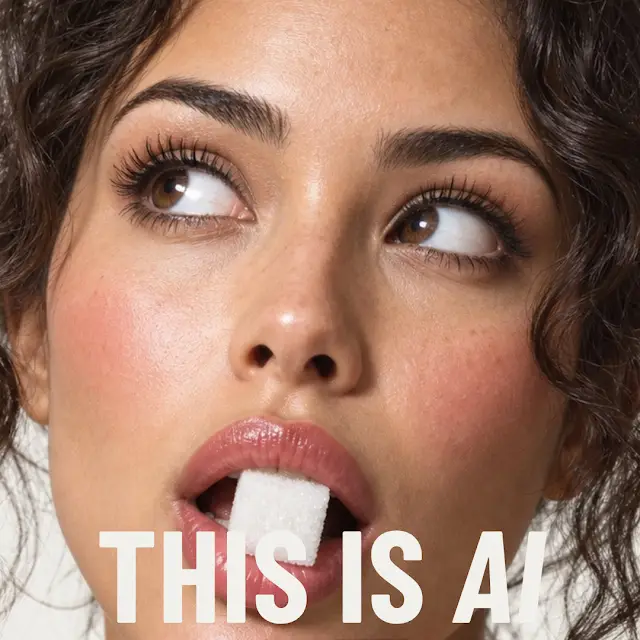
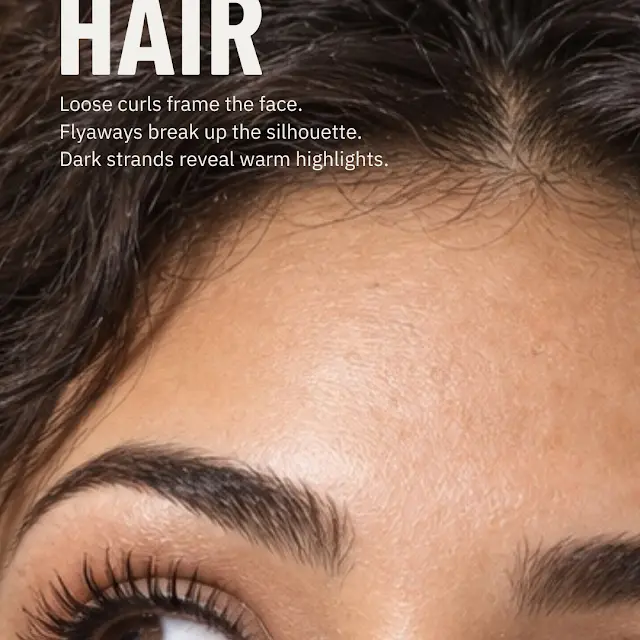
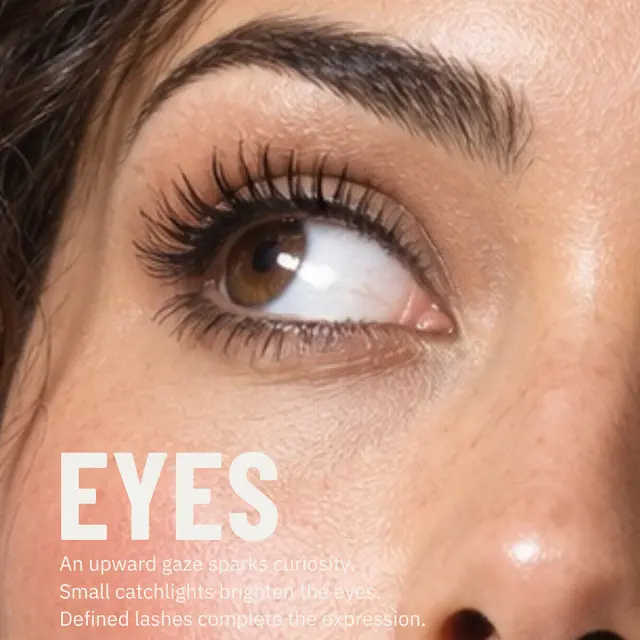
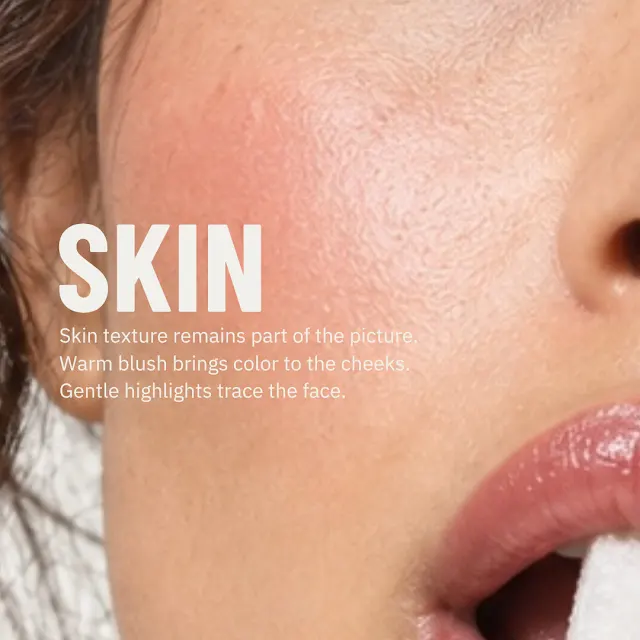
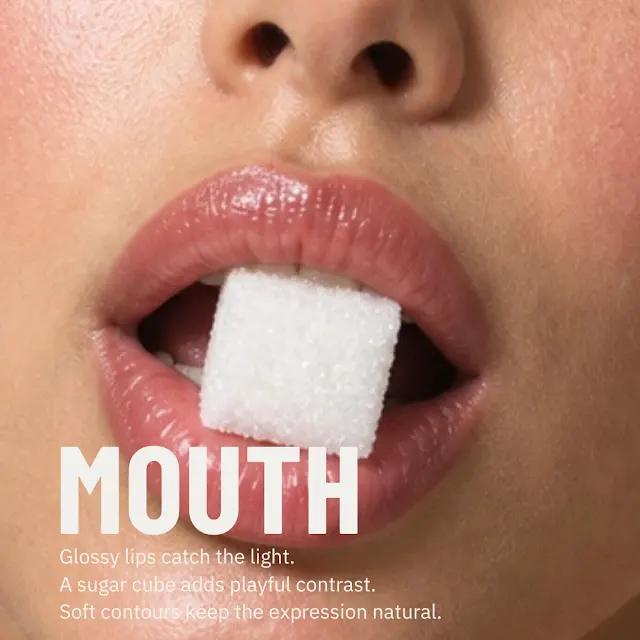
Consistency does not mean making every post look the same. It means allowing the AI persona to appear in different situations without losing her or his identity.
That is why LookSky develops dedicated, long-term characters rather than generating a disposable face for one campaign. The AI persona becomes a brand-owned asset with a defined appearance, personality and role.
Garment accuracy is not a finishing touch
In fashion, the product is not a prop. It is the reason for the content.
An attractive image can still be unusable if the garment is wrong. A quality review should compare the generated content with the source product and check:
- overall silhouette and garment length;
- neckline, hemline, seams and panel construction;
- sleeve length, strap width and closures;
- print placement and logo position;
- embellishments, trims, hardware and decorative details;
- fabric texture, weight, sheen and transparency;
- drape, folds and the way the garment responds to the pose;
- color under the intended lighting; and
- continuity between frames in video.
These details matter because customers use imagery to inspect a product they cannot touch. Baymard Institute’s product-page usability research found that 56% of participants’ first action on a new product page was to explore the product images. In its 2026 study of 1,922 U.S. apparel and accessories shoppers, Baymard found that size accuracy and fit details were the most sought-after information in customer reviews, selected by 48% of respondents. Sources: Baymard on product imagery and Baymard’s 2026 apparel study
AI social content does not replace product photography, size information or real customer fit feedback. Nor can an AI model prove how a garment will feel or fit on a real person. It should be used to communicate the overall styling and wearing effect, not as a promise of pixel-perfect fabric texture, embroidery or microscopic construction. Accurate product details should still be carried by the brand’s high-resolution product-page imagery and written specifications. When a brand uses AI to show a product, the depiction should still be checked carefully against what the brand actually sells.
If the real dress has a handkerchief hem, the content should not turn it into a straight hem. If the fabric has weight, it should not float like chiffon. If the hero detail is a beaded neckline, the beads should not migrate or disappear between frames.
In fashion, “almost right” can still be wrong.
Generic content usually begins before generation
Cheap-looking AI content is not only a rendering problem. Often, the inputs are too generic.
“Create a fashionable woman in a luxury outfit” does not define a brand. It leaves the system to fill the gaps with familiar visual patterns. The result may be polished, but it can resemble hundreds of other AI images.
A stronger process begins with decisions such as:
- Who is this character, and what role does she or he play for the brand?
- Which customers should recognize themselves—or their aspirations—in this person?
- What should the character never wear, say or promote?
- Which products deserve focus this month?
- Which details make those products distinctive?
- What locations, lighting and styling belong to the brand’s world?
- How polished, playful, aspirational or direct should the content feel?
The answers become creative guardrails. They give the team a basis for approving, rejecting and improving each piece of work.
Without guardrails, content is judged by whether it looks “good.” With guardrails, it can be judged by whether it is accurate, recognizable and useful to the brand.
Why a managed service is different from another AI tool
A self-service platform gives the brand access to a system. A managed service gives the brand a team responsible for the operating process around that system.
With self-service, the brand team typically remains responsible for briefing, prompting, selecting, correcting, checking product details, organizing approvals, publishing and learning from performance. The subscription may be affordable, but the brand supplies the operating time and judgment.
With LookSky, the brand sets the direction and guardrails. Our team handles the day-to-day work of developing the AI persona, planning content, producing and reviewing assets, publishing on dedicated AI influencer accounts, monitoring performance and improving the next cycle. These are separate, brand-owned social accounts—not the brand’s primary Instagram, TikTok or YouTube handles.
The brand still controls the important decisions:
- Brand guidelines and product truth: You provide the identity, priorities, product information and reference materials that define what “right” means.
- Monthly content direction: We present the proposed social strategy and content direction for review before the next cycle proceeds.
- Internal quality control: We check character consistency, important product features, visual quality, rights and basic platform compliance before content reaches your team.
- Focused client approval: We submit content that requires brand confirmation. Your team provides consolidated feedback within the agreed review window, and we complete the contracted revisions before finalizing the publishing schedule.
- Platform adaptation and review: We adapt titles, captions, music, hashtags and covers for each platform, then record performance and use the findings to improve the next content cycle.
This does not mean every output will be perfect on the first attempt. It means there is an accountable review and revision process rather than an expectation that the brand will operate another AI tool on its own.
What this has produced for a client brand
Quality control matters, but fashion content also has to reach people.
Across two client AI influencers operated on Instagram, TikTok and YouTube, the combined results for the 90 days from June 19 to September 16, 2026 were:
- Published posts
- 251
- Views
- 1.78M
- Reported reach
- 1.22M
- Engagements
- 89.8K
- Total followers
- 10.7K
These are company-reported platform results aggregated across Instagram, TikTok, and YouTube. Views and reach are not the same as unique people, and reported reach was only available for one of the three platform accounts attached to each AI influencer. The follower figure is the combined account total at the end of the period, not followers gained during the 90 days. Results vary, and these figures are not a guarantee of future performance.
The point is not that more posts automatically create a successful brand. It is that a managed AI-influencer operation can combine a steady publishing rhythm with real audience discovery, engagement and account growth—without asking the brand’s internal team to produce and manage every asset themselves.
AI influencers complement human influencers
LookSky is not trying to replace human influencers.
Human creators have relationships with their audiences. They can wear and experience a real product, offer personal reviews, answer questions and transfer earned trust to a brand. Those capabilities remain important deeper in the conversion funnel, particularly when a customer is deciding whether to believe a claim or make a purchase. An AI influencer cannot truthfully provide a first-person product experience.
AI influencers have a different strength. They can support the top of the funnel through recurring brand storytelling, product discovery and traffic to the brand’s website. Because the persona and its dedicated accounts belong to the brand, the content system can be developed over time rather than negotiated one collaboration at a time.
AI-influencer content can also help a brand gather early market signals for products that have not yet been produced. A brand can test creative themes, colors, silhouettes or styling directions and observe relative audience response before making a larger commitment. Those signals should inform—not replace—merchandising judgment, customer research, sampling and demand planning. Engagement with a concept is not the same as a confirmed order.
Why trust LookSky with fashion details?
We are fashion operators who have run influencer programs ourselves.
We understand that fashion content is not judged only on whether it attracts attention. It also has to represent the product, protect the brand and fit into a real commercial calendar.
We know why a buyer cares when the fabric looks too shiny. We know why a founder notices when the hemline changes. We know why a social lead cannot spend the afternoon regenerating hands, fixing a print or trying to make the same face appear in the next video.
That experience shapes how we work. We look at the AI persona and the garment. We consider the post on its own and the feed around it. We use AI to expand the brand’s ability to create, while keeping human fashion judgment inside the process.
Our managed AI influencers live on dedicated, brand-owned accounts separate from the brand’s primary handles. They add a new content presence without replacing the work already happening on the main brand channels. The brand’s team can continue managing core brand content and human-influencer relationships, while LookSky operates the dedicated AI influencer accounts.
AI content should strengthen the brand—not flatten it
The risk is not simply that an AI image will look artificial. The larger risk is that a stream of interchangeable content will make the brand feel interchangeable too.
The answer is not to avoid AI. It is to give it a defined role, a strong creative framework and a team that understands what to inspect.
For a fashion brand, quality lives in the details: the same face, the right hair, a believable pose, the true neckline, the correct embellishment, the weight of the fabric and the overall feeling that this AI persona belongs in this brand’s world.
When those details are managed consistently, AI content can become a recognizable brand asset rather than another generic experiment.
Managed by LookSky
Build a recognizable AI influencer.
Your brand sets the direction and approves the work. LookSky manages the dedicated, brand-owned AI influencer accounts.
Book a demoFrequently asked questions
Does AI fashion content always look cheap?
No. AI content tends to look cheap when the character, garment and visual direction are inconsistent or poorly reviewed. Strong references, clear brand guardrails and human quality control can produce a much more coherent result.
Can an AI influencer show our exact garments?
AI can create content based on a brand’s product references, but every output should be checked against the real garment. Important details include silhouette, length, neckline, seams, color, fabric appearance, drape, prints and embellishments. AI imagery should not be treated as proof of real-world fit or comfort.
Will our AI persona look the same in every post?
A dedicated character can be kept recognizable across posts when identity references and review standards are applied consistently. Variation is still expected across poses, expressions and lighting, so human review remains important.
Do we need a prompt engineer on our team?
Not necessarily. A self-managed workflow does require someone to brief the system, iterate, select outputs and correct problems. With a managed service, LookSky’s team handles that operating work while the brand provides its guidelines, product information, direction and approvals.
How does the brand approve the content?
The brand establishes its guidelines and guardrails at the outset. LookSky presents the proposed social media strategy direction for monthly review and performs an internal quality check before submitting content that requires brand confirmation. The brand provides consolidated feedback within the agreed review window, and LookSky completes the contracted revisions before final scheduling and platform adaptation. Exact deliverables, timelines and approval procedures are confirmed in the service agreement.
Where does the AI influencer content get published?
LookSky’s managed AI influencers operate on dedicated social accounts that are owned by the brand and separate from its primary handles. The brand’s primary accounts and existing human-influencer relationships remain with its internal team.