
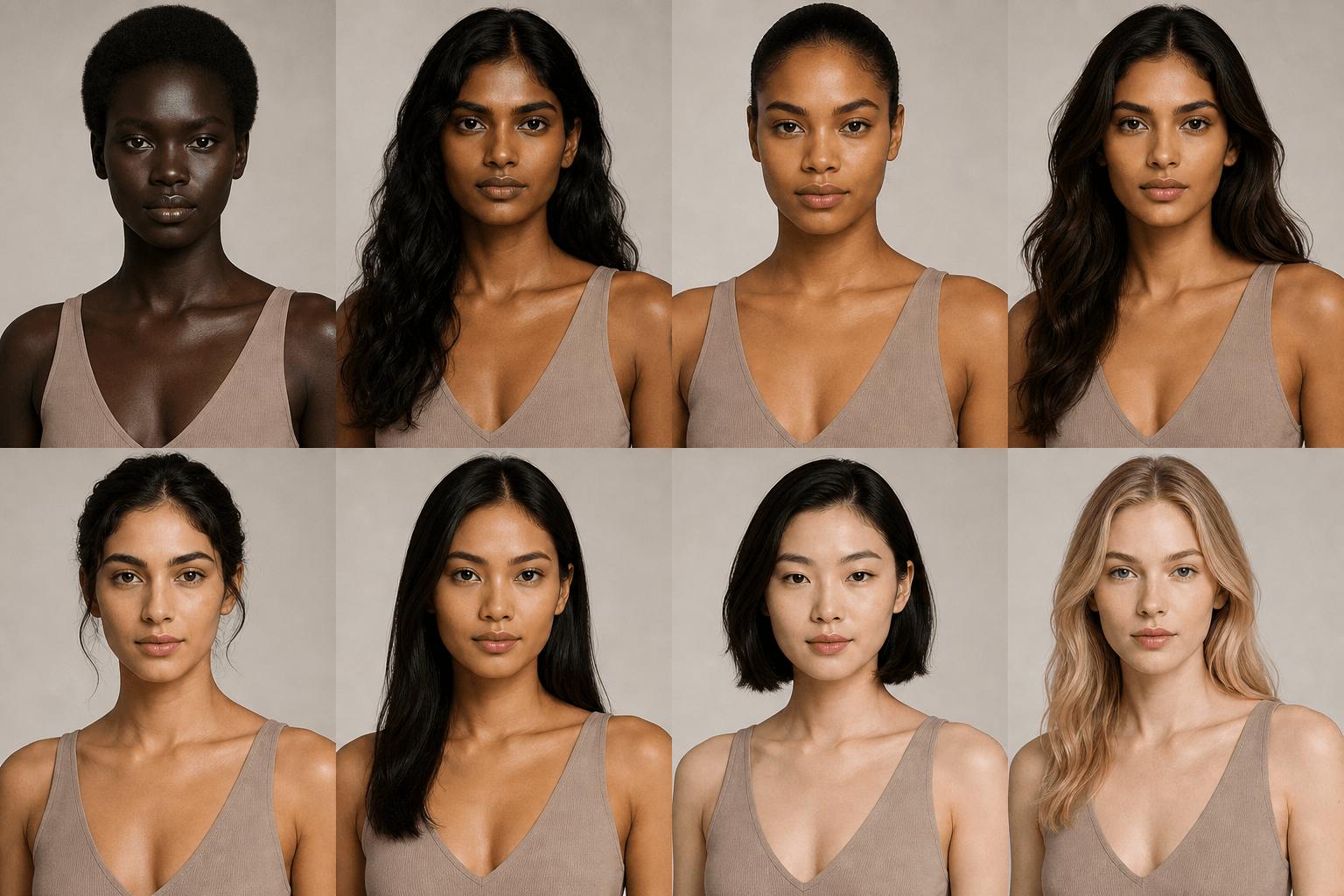
An AI influencer is a fictional digital personality created with artificial intelligence and operated as a recurring content creator. For a fashion brand, that means a consistent character with a defined look, voice and point of view who can model products, tell stories and publish social content over time. The brand can own the character and its creative assets, but people still direct the strategy, production, approvals and community standards behind it.
The term AI influencer is used loosely. It can describe everything from a one-off computer-generated model to a persistent digital personality with a social account and an audience. Those are not the same thing.
For fashion brands, the distinction matters. A beautiful generated image may solve a production need for one post. An influencer is an ongoing media property: recognizable, repeatable and capable of building familiarity from one collection to the next.
What is an AI influencer?
An AI influencer is a designed, digital character that appears consistently in content and communicates through a defined identity. The character may look photorealistic, stylized or obviously virtual. What makes it an influencer is not the software used to produce the face. It is the continuity.
A functioning AI influencer usually has:
- A recognizable identity: a stable appearance, name, personality and point of view.
- A reason to exist: a specific role in the brand’s content and audience strategy.
- A visual world: repeatable styling, locations, compositions and creative codes.
- An editorial system: planned themes, formats, publishing cadence and campaign priorities.
- Human governance: people making decisions about brand accuracy, product representation, claims, disclosure and community interaction.
Think of the character as the visible layer. The strategy and operating system behind it determine whether it becomes a durable brand asset or simply a stream of unrelated AI images.
How the LookSky process works
You provide product assets and approve the direction. LookSky handles influencer creation, content production, account operations, engagement and ongoing optimization.
Analyze Your Brand.
Find Its Edge.
- Your role
- Provide product assets, brand guidelines, target markets and business goals.
- LookSky handles
- Analyze brand positioning, target audiences, competitor performance and differentiation opportunities.
- Deliverable
- Brand assessment, differentiation direction and a clear marketing role for the AI influencer.
Define the Positioning.
Build the Influencer Persona.
- Your role
- Approve the AI influencer’s look, persona and brand guardrails.
- LookSky handles
- Design the persona and complete cross-platform account setup, visual consistency and launch preparation.
- Deliverable
- An approved AI influencer persona and launch-ready social accounts.
Plan Content &
Product Strategy.
- LookSky handles
- Use trends, campaign moments and product performance to plan topics, scripts and creative angles.
- Deliverable
- A content and product strategy covering priority products, topics, scripts and creative directions.
Produce, Publish
& Promote.
- LookSky handles
- Produce and review images, videos and captions, then handle publishing, engagement and amplification.
- Deliverable
- 30 posts per platform each month, including images, videos, captions and source assets.
Validate. Optimize.
Repeat.
- LookSky handles
- Track views, engagement, follower growth, site visits and conversions, then analyze and optimize performance.
- Deliverable
- A performance report with recommendations for the next product, content, publishing and promotion cycle.
AI influencer, virtual influencer or AI avatar: what is the difference?
| Approach | Primary purpose | Is the identity persistent? | Typical brand workload |
|---|---|---|---|
| AI avatar tool | Create presenter-style videos from a script | Sometimes | Scripts, prompts, production review and distribution |
| AI UGC generator | Produce ad or social variations quickly | Usually not | Briefing, prompting, selection, editing and testing |
| Virtual influencer | Operate a fictional digital personality | Yes | Strategy, character management, content and publishing |
| AI fashion influencer | Build a persistent fashion-focused creator and content program | Yes | Depends on whether the program is self-serve or managed |
| Human influencer | Bring a real person, lived perspective and often an existing audience | Yes | Discovery, contracts, briefing, coordination and approvals |
An AI influencer can also be a virtual influencer. The useful dividing line is operational: a generator makes assets; an influencer program builds and manages an identity over time.
What can fashion brands use an AI influencer for?
1. Create an always-on stream of creator-style content
Lean teams often have more products and stories than they have production capacity. A persistent digital creator can support launches, styling ideas, seasonal moments and evergreen storytelling without restarting creator discovery for every brief.
2. Build a recognizable brand-owned personality
When the brand owns the character and account, the audience relationship can compound over time. The value is not only the individual asset; it is the familiarity created through a consistent face, tone and world.
3. Explore creative directions before larger production commitments
Brands can test themes, styling directions or audience responses before investing in more expensive production. This does not replace proper product validation, but it can produce useful creative signals.
4. Adapt stories for different markets and moments
A governed AI persona can appear across multiple settings and formats while preserving a coherent identity. Localization still requires cultural judgment and human review; speed should never be confused with relevance.
5. Support—rather than replace—human creator programs
Human creators bring lived experience, genuine product use, personal credibility and existing communities. AI influencers bring control, continuity and flexible production. Many brands will get the most value by assigning each a different job.
Real LookSky examples
See the influencers in motion.
Want the influencer without another operation to manage?
LookSky develops the persona and runs the ongoing content and publishing system around your fashion brand.
Book a demoIs an AI influencer right for your brand?
An AI influencer may be a good fit if:
- You need recurring creator-style content rather than a single campaign asset.
- You want a consistent identity that can move across products, collections and channels.
- Creator sourcing and coordination are limiting your content capacity.
- Your brand has a clear visual world—or is ready to define one.
- You want to build an owned content property instead of renting attention for every post.
- Your team can establish clear rules for accuracy, disclosure and approvals.
It may be the wrong fit when the core value of the brief depends on real experience. Product testimonials, personal transformation stories, founder narratives and community credibility often require a real person. A digital character should never imply that it physically tried a garment, attended an event or had an experience that did not occur.
Self-serve or managed: who does the work?
Creating images is only one part of running an influencer. A self-serve tool can be appropriate when a brand already has internal creative direction, prompting expertise, retouching capacity, social strategy and time for quality control.
A managed model, like LookSky, is designed for brands that want an owned AI influencer and an ongoing content program without assembling another production operation internally. LookSky develops the persona and manages the content workflow, while the brand sets the direction and approves the work.
When evaluating a managed partner, confirm who owns the persona and social accounts, how products are represented, what the approval process includes and how performance insights shape the content plan.
How should a brand measure an AI influencer?
Views alone cannot tell you whether the program is working. Measurement should follow the job you assigned the influencer.
- Attention: reach, video completion, profile visits and follower growth.
- Resonance: saves, shares, substantive comments and repeat engagement.
- Intent: product-page visits, link clicks, email sign-ups and qualified inquiries.
- Creative learning: which styling, hooks, products and story formats repeatedly outperform.
- Operational value: publishing consistency, usable output, production time and cost relative to alternatives.
Set a baseline before launch and agree on a review window. A new character needs time to establish its identity, but “brand building” should not become an excuse for publishing without a learning agenda.
What about disclosure and transparency?
Brands should make the character’s digital nature understandable rather than waiting for audiences to discover it. The profile, content language and platform settings should work together to avoid misleading people.
In the United States, endorsement rules still matter. The FTC’s revised Endorsement Guides explicitly address virtual influencers, and material relationships should be disclosed clearly and conspicuously. The FTC also cautions that a platform’s built-in disclosure tool may not be sufficient on its own. Meta uses technical signals and user disclosures to label some AI-generated or altered media, and its approach continues to evolve.
This is an area where brands should maintain a current review process. Platform policies and legal requirements vary by market and can change. When the content includes a product claim or endorsement, obtain advice appropriate to the brand and jurisdiction.
Five questions to answer before creating one
- What recurring audience or content problem will this character solve?
- Why should it be a persistent influencer rather than a series of generated campaign assets?
- Who will own the character, social accounts and creative assets?
- Who is responsible for product accuracy, rights, disclosure, claims and final approval?
- What evidence will determine whether the program expands, changes or stops?
If a prospective tool or partner cannot answer those questions clearly, the brand is not yet evaluating an influencer program. It is evaluating image production.
Frequently asked questions
Are AI influencers real people?
No. An AI influencer is a fictional digital character, even when the images look photorealistic. Human teams still create, direct and manage the character and its content.
Do AI influencers replace human influencers?
They do not need to. Human influencers and AI influencers provide different forms of value. Human creators offer lived experience and established trust; AI influencers offer a brand-owned identity, creative control and repeatable production.
Can an AI influencer wear a brand’s real products?
Yes, but the production process and quality control matter. The team should review silhouette, construction, pattern, color and styling so the resulting content does not misrepresent the product.
Does an AI influencer need to be disclosed?
Brands should clearly communicate that the character is digital and follow applicable advertising rules and platform policies. Endorsements and material brand relationships may require additional clear and conspicuous disclosures.
Who owns an AI influencer?
Ownership depends on the contract and production model. Before starting, confirm in writing who owns the character, name, likeness, accounts, audience data and produced assets—and what happens if the vendor relationship ends.
The bottom line
An AI influencer is not valuable simply because it is generated with AI. It becomes useful when a fashion brand gives it a clear job, builds a recognizable identity and supports it with a disciplined content operation.
The right question is not, “Can we generate a digital model?” It is, “Can this character help us tell better stories, learn faster and build an audience we can continue to serve?”
Sources and editorial note: Transparency guidance was reviewed against the FTC’s influencer disclosure guidance, the FTC’s 2023 Endorsement Guides update and Meta’s AI-content labeling overview. This article provides general business information, not legal advice.